
Whether you are just entering perimenopause or fully on the wild rollercoaster ride that it is, one thing is certain: you NEED to be getting exercise during this period of life. Whether you haven’t really done any structured workouts before or are a seasoned gym rat, perimenopause is a time of life to come up with a specific plan to get you moving in the right direction. Read on to learn about the BEST exercise for perimenopause!
Why Exercise Is Essential in Perimenopause
- Regulates hormones: Helps balance estrogen, cortisol, and insulin.
- Builds and preserves muscle mass: Muscle naturally declines with age, but strength training helps you maintain lean tissue and stay strong.
- Supports bone density: Weight-bearing exercise stimulates bone growth and reduces the risk of osteoporosis.
- Improves mood and sleep: Boosts serotonin, dopamine, and endorphins for better mental health and rest.
- Supports metabolism: More muscle means a higher resting metabolic rate, which helps prevent weight gain.
- Reduces belly fat: Especially visceral fat that tends to increase with hormonal shifts.
If you have done a specific routine in the past but find that it’s no longer working, that’s ok. Not only is it ok, but it is actually normal during perimenopause – what used to work no longer does! That’s why it is essential to pivot and come up with an attainable plan that works for you. Here’s a helpful hint: going overboard with long cardio workouts or high intensity interval training (HIIT) can actually sabotage you by driving up cortisol levels, which leads to a stressed out body that wants to hang on to fat.
As a former CrossFit junkie, that’s kind of a hard pill to swallow. But I can affirm that when I try to push as hard as I used to, not only can I just not sustain the intensity like I used to, but it wipes me out for the rest of the day. So, what kind of working out is the best during perimenopause? You can’t go wrong with this combo:
- Walking daily
- Strength training 3 times per week
- One HIIT workout per week (CrossFit style, sprint intervals, Peloton sprints, etc)
Here’s what each of these modalities accomplishes for you:
Walking – walking is gentle, low impact, and great for regulating cortisol (our “stress” hormone). If you are able to time your daily walk for after a meal, it’ll have great benefits for insulin sensitivity as well.
I don’t believe in a “prescribed” amount of steps for every woman. I do think you should look at your daily average of steps and then add 1000 more if you are trying to drop some pounds. So if your daily average is 6,000 steps, make it your goal to get 7,000 per day. If you don’t have a watch or device to track your steps, just look at your health app on your phone – if you carry your phone with you most of the day, that data will be on there.
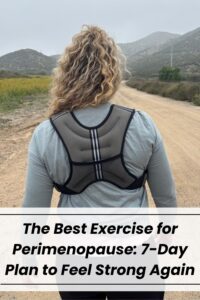
Bonus: add a weight vest for your walks – the benefits are numerous and it’ll substitute for a strength training session if you’re unable to get one in.

Strength training – Strength training is one of the most important forms of exercise during perimenopause because it helps counteract the natural decline in muscle mass and bone density that occurs with age and hormonal changes. As estrogen levels drop, women become more susceptible to osteoporosis and sarcopenia (the technical name for muscle loss), but regular resistance training can preserve lean muscle, increase metabolic rate, strengthen bones, and improve balance and stability. Beyond physical benefits, strength training also supports better mood, reduces stress, and enhances overall confidence—making it a powerful tool for navigating the perimenopausal transition.
Check out my blog post here that is all about how to get started with weight lifting.

HIIT – High-Intensity Interval Training (HIIT) can be a highly effective addition to a perimenopausal fitness routine when used in moderation. Short bursts of intense activity followed by rest periods help boost cardiovascular health, improve insulin sensitivity, and support fat loss—especially around the midsection, which tends to increase during hormonal shifts. HIIT also stimulates growth hormone and other beneficial adaptations that can help preserve muscle and enhance energy levels. However, because perimenopause can heighten stress sensitivity, it’s important to limit HIIT to once or twice a week to avoid spiking cortisol and to prioritize recovery (I prefer once).
What does HIIT look like? I wrote a post about some perimenopause-friendly HIIT workouts here. Other forms of HIIT can be sprint intervals, swim or bike sprints – anything that gets your heart rate up in short intervals in a shorter workout (15-20 minutes is plenty).

If you need help figuring out a workout schedule, check out this list here:
| Day | Movement Plan |
| Monday | 🏃♀️ Walk 30 min + 💪 Full-Body Strength Training |
| Tuesday | 🚶♀️ Walk 30 min + 🧘♀️ Optional gentle stretching or yoga |
| Wednesday | 🏃♀️ Walk 30 min + 💪 Lower Body Strength Training |
| Thursday | 🚶♀️ Walk 30 min + 🧘♀️ Optional Pilates or recovery |
| Friday | 🏃♀️ Walk 30 min + 💪 Upper Body Strength Training |
| Saturday | 🏃♀️ Walk 30 min + ⚡️ 20-min HIIT session |
| Sunday | 🧘♀️ Rest, Recovery, or a Leisurely Walk (Your Choice) |
Feel free to mix and match what days work best for YOU – as a hospital shift worker, I personally count my steps from the work day as my workout (if you know, you know!). The point is to make a goal that pushes you to be moving, but not to overwhelm yourself since we already have so much overwhelm in our lives during this time.
Final Thoughts
Perimenopause doesn’t have to feel like your body is working against you. With the right kind of movement—balanced, intentional, and supportive—you can feel strong, clear, and energized. This 7-day plan is just the beginning of taking back control of your health during this season of change.
Check out some of my other posts you may enjoy:
Top 10 Signs and Symptoms of Perimenopause
Top 5 Supplements for Women over 40
Natural Remedies for Anxiety in Menopause